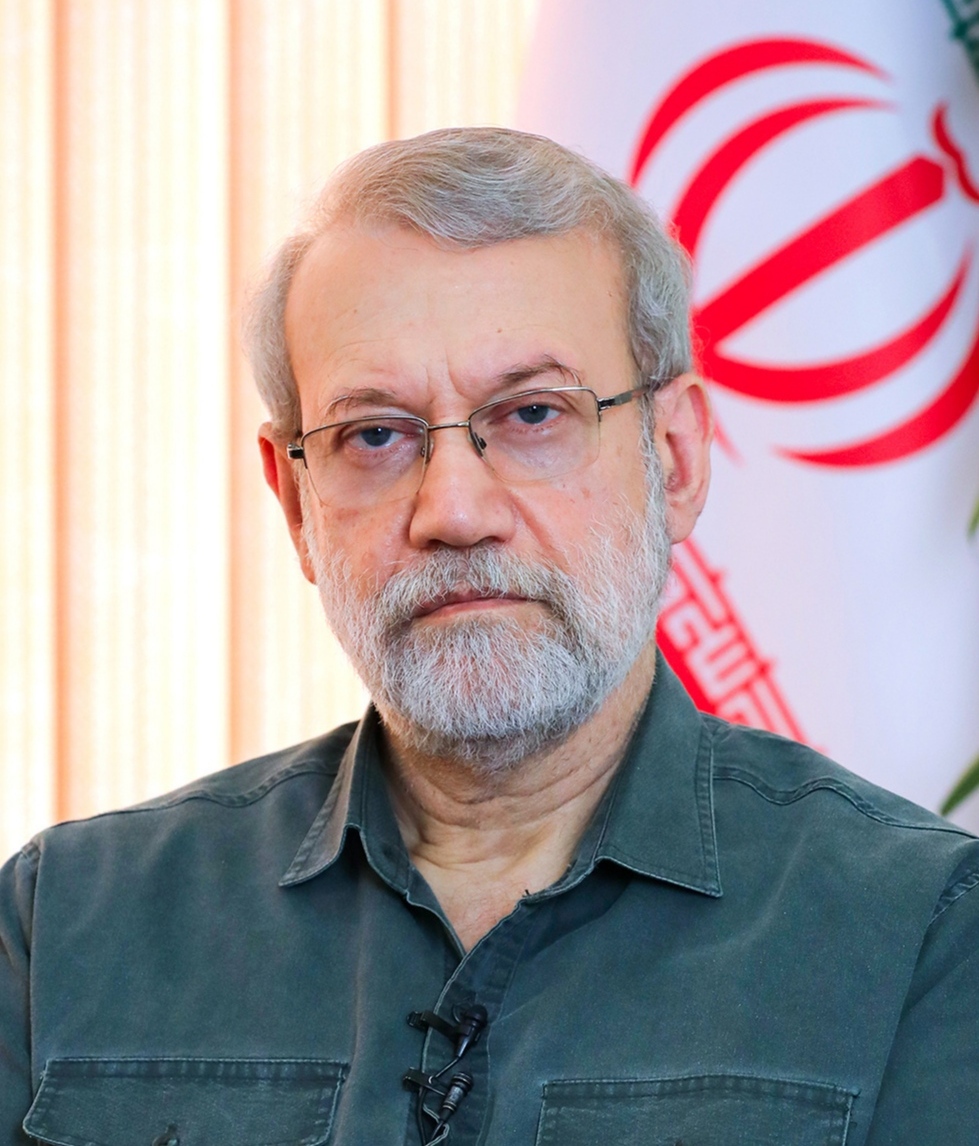
From Negotiator to Avenger: Ali Larijani's New Iran Strategy
The geopolitical landscape of the Middle East has been irrevocably reshaped, and at its heart stands Ali Larijani, a figure whose recent transformation from a seasoned diplomat to a formidable hardliner signals a dramatic shift in Iran's strategic direction. Once perceived as the pragmatic face of the Iranian establishment, Larijani's rise to prominence amidst unprecedented crisis suggests a new era for the Islamic Republic, one defined by vengeance and a potentially militarized model of governance. Understanding the nuances of Larijani Iran Macht is crucial to grasping the future trajectory of this pivotal nation.
The Pragmatist's Pivot: From Negotiator to Hardliner
For decades, Ali Larijani was synonymous with a certain intellectual gravitas within Iranian politics. Born in Najaf in 1958, his career path was marked by significant governmental roles, including a decade as head of the Islamic Republic of Iran Broadcasting. It was his appointment as Supreme National Security Council (SNSC) secretary in 2005 that truly cemented his international profile, placing him at the helm of Iran's sensitive nuclear negotiations. He was the calm, articulate voice, engaging with Western powers, even reportedly delving into the philosophies of Immanuel Kant.
However, the events of early March following devastating US-Israel strikes that claimed the lives of Supreme Leader Ayatollah Ali Khamenei and IRGC commander Mohammad Pakpour, witnessed an abrupt and unequivocal shift. Hours after the strikes, Larijani, 67, utilized X (a platform inaccessible to most Iranian citizens) to declare, "Today we will hit them with a force that they have never experienced before." This was no longer the language of negotiation, but of unbridled retribution. His rhetoric further hardened over the weekend, explicitly rejecting any notion of resuming nuclear talks with the United States, calling President Trump's suggestions "delusional fantasies." The once-diplomatic negotiator had shed his former skin, emerging as a fierce advocate for a relentless counterstrike, fundamentally altering the perception of Ali Larijani: The Hardliner Taking Charge in Post-Khamenei Iran.
Seizing the Reins: Larijani's Ascendant Power in Post-Khamenei Iran
Ayatollah Khamenei's death created an immediate power vacuum, traditionally reserved for a cleric and dictated by a shortlist of successors. Yet, Larijani, a non-cleric, has emerged as the most likely figure to fill this void. While an interim three-person committee officially assumed leadership of the Islamic Republic, power dynamics within Iran are notoriously complex. Experts suggest that the true locus of authority remains concentrated within the Supreme National Security Council, an institution Larijani strategically commands.
His influence has demonstrably eclipsed that of the official president, Masoud Pezeshkian, both on the international stage and within Iran's domestic landscape. Larijani was among the earliest and loudest voices demanding a brutal crackdown on widespread political demonstrations that erupted late last year, fueled by a deepening economic crisis. This unrest, the largest since the 1979 Islamic Revolution, was met with lethal force, reportedly resulting in the deaths of as many as 30,000 people. This assertive domestic stance, coupled with his international declarations, underscores the consolidation of Larijani Iran Macht. His grip on power, despite his non-clerical status, signifies a profound disruption to the long-held assumptions of clerical rule, opening the door for a hardline security figure to steer the nation. For a deeper dive into these power shifts, see Iran's New Power Broker: Ali Larijani's Grip Amid US-Israel Crisis.
A New Doctrine: Iran's Militarized Future Under Larijani?
The implications of Larijani's ascent and his hardened stance are profound, signaling a potential shift towards a more militarized model of governance for Iran. This isn't merely a change in rhetoric; it suggests a fundamental reorientation of the state's priorities and operational framework. In such a model, security apparatuses, particularly the Revolutionary Guard Corps (IRGC), would likely gain even greater prominence, influencing policy decisions across all sectors—economic, social, and foreign relations.
What "Militarized Governance" Could Mean:
- Increased IRGC Authority: Expect the IRGC's influence to expand beyond military and security matters into broader economic and political spheres.
- Prioritization of Defense: A significant portion of national resources would likely be diverted towards military buildup, research, and development, potentially at the expense of social welfare programs.
- Heightened Regional Tensions: A more militarized Iran under Larijani is likely to project its power more aggressively in the region, potentially escalating conflicts with rivals and proxies.
- Reduced Civil Liberties: Domestically, a focus on national security often translates into stricter controls on dissent, surveillance, and suppression of political freedoms, as evidenced by the recent crackdowns.
This trajectory contrasts sharply with the diplomatic path Larijani once championed. His current vision, born from the crucible of perceived foreign aggression and domestic unrest, promises a resolute and unyielding Iran on the global stage. This transformation of Larijani's personal ideology reflects a larger shift within the Iranian establishment, where survival and vengeance have superseded the pursuit of diplomatic detente.
Navigating the Crisis: International Implications and Regional Stability
Larijani's leadership presents a complex challenge for international actors. His unequivocal rejection of negotiations with the United States effectively closes a crucial diplomatic channel, leaving fewer off-ramps for de-escalation in an already volatile region. The vow of vengeance against the US and Israel by the interim leadership, now seemingly championed by Larijani, raises the specter of direct confrontation and widespread destabilization.
Key Considerations for International Observers:
- Risk of Escalation: With diplomatic avenues curtailed, the risk of miscalculation or reactive strikes spiraling into broader conflict is significantly heightened.
- Nuclear Program Uncertainty: Larijani's previous role in nuclear talks now gives way to an uncertain future for Iran's nuclear ambitions, potentially leading to increased proliferation concerns.
- Regional Power Dynamics: Neighboring states, particularly Saudi Arabia and the UAE, will be closely watching Larijani's moves, potentially leading to a realignment of alliances or an arms race.
- Humanitarian Impact: Any widespread conflict or further domestic crackdown under a militarized government would exacerbate the already severe humanitarian crisis, impacting millions.
Understanding the internal dynamics of Larijani's rise and the hardening of Iran's stance is paramount for international policymakers seeking to navigate this perilous period. It suggests that traditional diplomatic tools may be less effective, necessitating a re-evaluation of engagement strategies to prevent further regional instability.
Conclusion
Ali Larijani's evolution from a measured negotiator to a defiant avenger marks a watershed moment for Iran. His ascendance to a position of profound Larijani Iran Macht, especially in the wake of Ayatollah Khamenei's death and amidst escalating external pressures, signifies a departure from established norms of governance and international engagement. Whether this new strategy leads to a stronger, more resilient Iran or plunges the region into deeper turmoil remains to be seen. What is clear is that the world must grapple with a transformed Iran, led by a figure whose past pragmatism has yielded to a fierce resolve for retribution, promising an unpredictable and potentially volatile future.