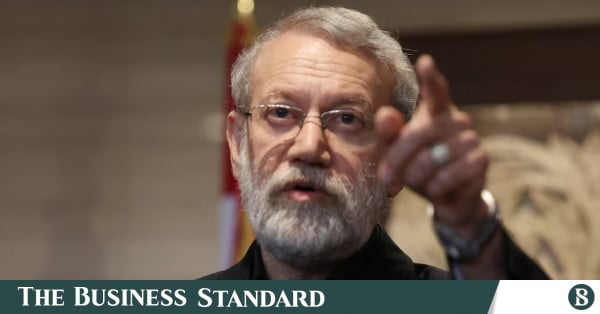
Iran's New Power Broker: Ali Larijani's Grip Amid US-Israel Crisis
In the turbulent landscape of Iranian politics, a seismic shift has occurred, pushing a long-standing figure into the undeniable spotlight as a primary power broker. Ali Larijani, once the calm, analytical face of Iranian diplomacy, has emerged as a formidable force, consolidating immense authority amid an escalating crisis with the United States and Israel. His ascent marks a profound reordering of influence within the Islamic Republic, challenging decades of traditional clerical rule and heralding a potentially more militarized era for Iran. The question on everyone's minds: how has **Larijani Iran Macht** – Larijani's power in Iran – become so absolute?
The Unexpected Ascent of a Veteran Statesman
Ali Larijani's journey through the echelons of Iranian power is both extensive and multifaceted. Born in Najaf in 1958, his career began far from the international stage, serving as deputy minister of labour and social affairs. By 1994, he was at the helm of the Islamic Republic of Iran Broadcasting (IRIB), a powerful propaganda arm, a position he held for a decade. His tenure as the longest-serving speaker of the Majles (parliament) from 2008 to 2020 further cemented his status as a political heavyweight, navigating Iran through an intensifying crisis with the United States that began to simmer years ago.
However, it was his appointment as Secretary of the Supreme National Security Council (SNSC) in 2005 that truly positioned him at the nexus of Iran's most critical strategic decisions, including its nuclear program. For years, Larijani cultivated an image of a pragmatic intellectual, even penning books on the German philosopher Immanuel Kant and engaging in complex nuclear negotiations with Western powers. This background painted him as a figure capable of nuanced diplomacy, a bridge-builder of sorts in a nation often characterized by its hardline rhetoric. Yet, the recent tumultuous events have stripped away this perception, revealing a new, unyielding posture that has shocked observers globally. His deep roots within the system, coupled with his strategic positions over decades, laid the groundwork for his current, unprecedented grip on power, making him a central figure in understanding the future trajectory of the nation.
A Nation on Edge: The Catalyst for Larijani's Rise
The landscape of Iranian power was irrevocably altered by a series of devastating US-Israel strikes that tragically claimed the lives of Supreme Leader Ayatollah Ali Khamenei and Iranian Revolutionary Guard Corps (IRGC) commander Mohammad Pakpour. This singular event, occurring on March 1st, ripped through the heart of Iran’s leadership, creating an immediate and profound power vacuum. The long-held assumptions about the continuity of clerical rule were instantly shattered, opening the door for an unexpected contender to assert dominance.
In the immediate aftermath of these deadly strikes, Larijani, 67, dramatically shed his pragmatic facade. Taking to X (a platform notably banned for most Iranian citizens), he issued a defiant and aggressive statement: "Today we will hit them with a force that they have never experienced before." This was not an isolated outburst; his tone hardened significantly over the ensuing weekend as a three-person interim committee officially assumed temporary leadership. He vehemently dismissed any reports of renewed nuclear talks with the Trump administration, stating emphatically, "We will not negotiate with the United States," and deriding President Trump's views on the unfolding conflict as "delusional fantasies." Appearing on state television just 24 hours after the strikes, Larijani delivered a fiery message that resonated with profound anger and a promise of retribution: "America and the Zionist regime have set the heart of the Iranian nation ablaze. We will burn their hearts. We will make the Zionist criminals and the shameless [Americans] pay."
Despite not being named among the new interim council members, Larijani's influence has become unparalleled. Power in Iran is widely believed to be concentrated within the Supreme National Security Council, which he leads. This strategic positioning has allowed his authority to eclipse that of the official president, Masoud Pezeshkian, both domestically and on the international stage. The crisis, therefore, did not merely create a vacuum; it served as a crucible, forging a new, uncompromising leader from the depths of Iran's established order.
Ali Larijani: The Hardliner Taking Charge in Post-Khamenei Iran has thus seized the moment, positioning himself as the indispensable figure capable of guiding Iran through its darkest hour.
From Negotiator to Avenger: Larijani's New Stance
The transformation of Ali Larijani from a nuanced negotiator to an outspoken hardliner is one of the most striking aspects of his recent rise. For decades, he was known for his intellectual pursuits, his role in crafting nuclear deals with the West, and his generally measured approach to complex geopolitical challenges. However, the confluence of internal unrest and external aggression has revealed a dramatically different persona. This shift is not merely rhetorical; it is deeply embedded in his recent actions and pronouncements, signaling a significant change in Iran’s strategic direction.
Domestically, Larijani has been among the most vocal and earliest proponents within Iran’s leadership for a brutal crackdown on political demonstrations that erupted at the end of last year. These protests, fueled by a deepening economic crisis, represented the largest uprising since the 1979 Islamic Revolution. The regime's response, heavily influenced by figures like Larijani, was met with overwhelming force, with reports suggesting as many as 30,000 people have been killed this year alone. This uncompromising stance on internal dissent mirrors his aggressive posture on the international stage, where he now unequivocally rejects dialogue with the United States. His shift highlights a clear strategy: consolidate power through decisive, often ruthless, action both at home and abroad.
Experts now view Larijani not just as a plausible leadership contender but as someone who could steer Iran toward an even more militarized model of governance. This represents a significant departure from the traditional clerical oversight and consensus-building that characterized previous eras. His direct embrace of violence and rejection of diplomatic overtures signal a more confrontational approach to foreign policy. The implications are profound, suggesting a future where Iran prioritizes security interests and military strength above all else, potentially exacerbating regional tensions and challenging global stability. It's a stark contrast to his past as a pragmatic negotiator, illustrating how personal ambition and national crisis can dramatically reshape a leader's ideology and strategy. This radical change underscores the title
From Negotiator to Avenger: Ali Larijani's New Iran Strategy.
Reshaping Iran's Future: Challenges and Implications
Ali Larijani's burgeoning **Larijani Iran Macht** presents Iran with a future profoundly different from its past. The death of Ayatollah Ali Khamenei and the ensuing crisis have fundamentally upended long-held assumptions about the continuity of clerical rule. Larijani's rise, despite not being among the clerics Khamenei had identified as potential successors, signifies a powerful shift towards a leadership dominated by hardline security figures rather than religious scholars. This represents a significant challenge to the foundational principles of the Islamic Republic, potentially altering the very essence of its governance.
The challenges Larijani faces are immense, both internally and externally. Domestically, while his strongman image might appeal to certain factions, he must contend with deep-seated economic grievances, widespread social unrest, and a population that has experienced brutal suppression. Maintaining stability and legitimacy will require more than just force; it will demand a strategy to address the root causes of discontent. Externally, the interim leadership has vowed vengeance against the US and Israel, setting the stage for potentially dangerous escalation. This confrontational stance could invite further international isolation, sanctions, and military action, straining Iran's resources and risking broader regional conflict.
*
Key Indicators to Watch:
*
Military Posture: Observe Iran's military deployments and proxy group activities in the region. An increase in these could signal Larijani's commitment to a militarized strategy.
*
Nuclear Program: Any acceleration or explicit rejection of international oversight of Iran's nuclear activities would be a critical sign of a hardened stance.
*
Economic Policy: Larijani's approach to the dire economic situation will be crucial. Will he prioritize internal stability or external confrontation?
*
Internal Dissent: The severity of the regime's response to future protests will indicate the extent of Larijani's authoritarian grip.
The geopolitical implications of a Larijani-led, or at least Larijani-influenced, Iran are far-reaching. A more militarized and uncompromising Iran could destabilize the Middle East, impact global oil markets, and force a realignment of regional alliances. The international community, while advocating for stability, faces the complex task of navigating a leadership that seems to reject traditional diplomatic channels. Understanding the nuances of Larijani's power and his strategic priorities will be paramount for any future engagement or response.
Conclusion
Ali Larijani stands at a pivotal juncture in Iran's history, his **Larijani Iran Macht** undeniable and his influence profound. From a sophisticated negotiator and intellectual, he has transformed into the unequivocal voice of defiance and retribution following the devastating US-Israel strikes. His dramatic ascent, characterized by a ruthless consolidation of power domestically and an aggressive posture internationally, marks a radical departure from established norms and traditional succession pathways. As Iran grapples with internal unrest, economic hardship, and external pressures, Larijani's leadership signals a potentially more confrontational and militarized future. The path he forges will not only reshape the destiny of the Islamic Republic but will undoubtedly send ripples across the Middle East and beyond, demanding vigilant observation and careful consideration from the global community.